Why Your Supply Chain’s Future Depends on Today’s Plan
Capacity planning in supply chain management is the process of determining the production capacity needed to meet customer demand by ensuring you have the right resources—people, machines, and materials—at the right time.
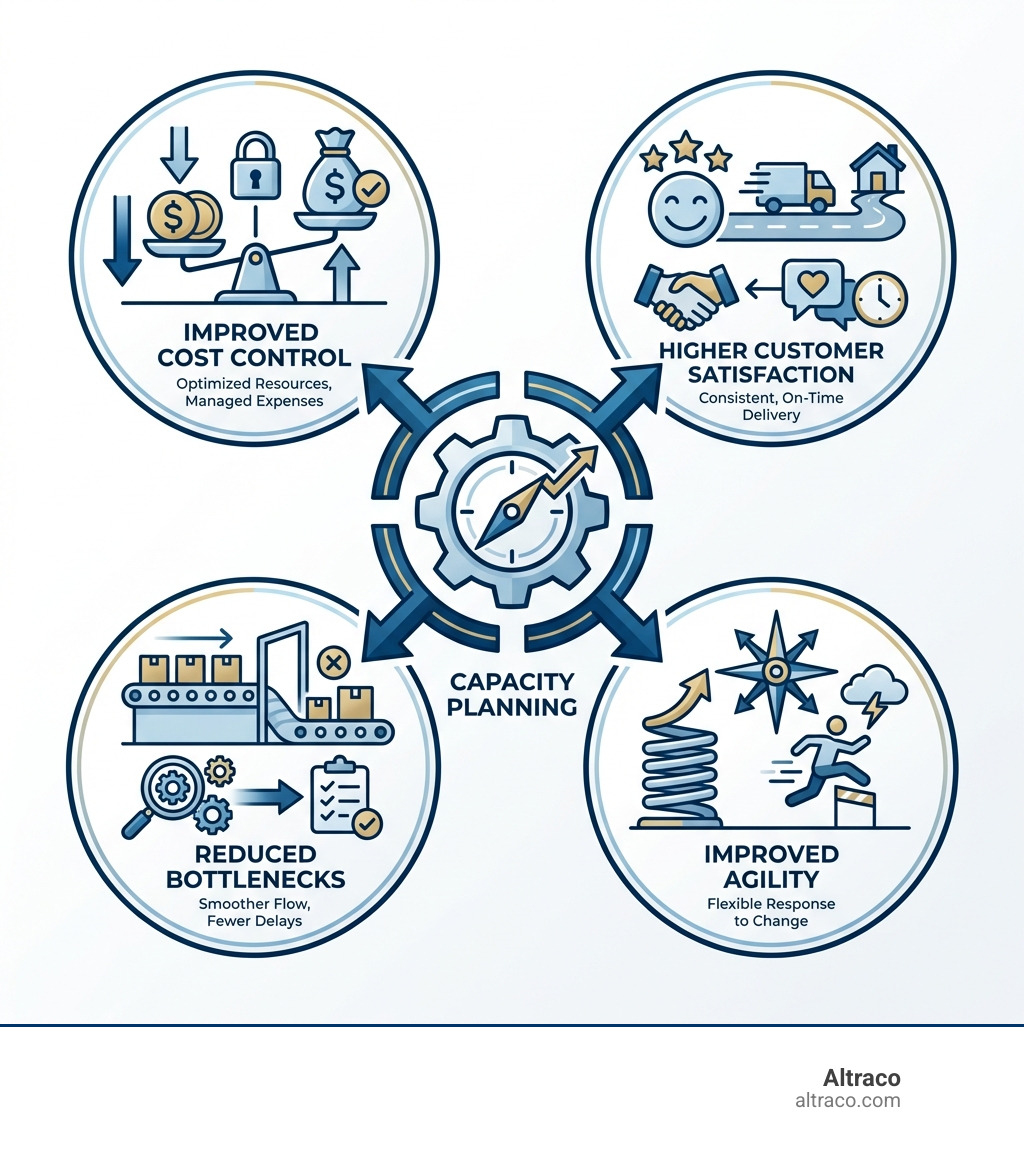
Why is it so important? Effective capacity planning helps you:
- Consistently meet customer demand and deliver on time.
- Avoid stockouts and costly overproduction.
- Manage costs by optimizing resources.
- Reduce risks like delays and rush orders.
- Support business growth and new product launches with confidence.
In today’s dynamic global marketplace, mastering capacity planning in supply chain management is a necessity. It involves accurately forecasting demand and aligning your production capabilities, workforce, and materials to meet it. For large enterprises navigating the complexities of offshore manufacturing, including ever-changing tariffs and the need for reliable delivery, precise capacity planning is the cornerstone of operational stability and cost efficiency. It allows companies to avoid costly underproduction or wasteful overproduction, securing consistent product flow and customer satisfaction.
I’m Albert Brenner, and with over four decades in contract manufacturing, I’ve seen how crucial effective capacity planning in supply chain management is for Fortune 500 companies producing home improvement, sporting goods, automotive, and outdoor products. My firm, Altraco, specializes in navigating these complexities to ensure quality and on-time delivery for brands globally.
Capacity planning in supply chain management vocabulary:
What is Capacity Planning in Supply Chain Management?

At its heart, capacity planning in supply chain management is about aligning your ability to produce with what your customers want to buy. The ultimate goal of capacity planning is to match production capacity with customer sales demand. This isn’t just about having enough machines running; it’s a strategic imperative that influences everything from long-term investment decisions to daily operational efficiency and, ultimately, profitability. It involves forecasting future demand and assessing whether your current facilities, labor, and equipment can accommodate that demand, from factory output in Vietnam to logistics in Mexico.
The Critical Importance of Capacity Planning in a Volatile Market
Where consumer expectations are high and supply chains constantly evolve, effective capacity planning in supply chain management is vital. It allows businesses to monitor costs, mitigate risks like stockouts and rush orders, and improve service levels. By aligning capacity with demand, companies can build a better brand reputation through consistent delivery of quality products. This planning also provides a blueprint for navigating disruptions and supporting growth, whether launching a new product line or expanding into new markets. We can streamline our supply chain operations and optimize our inventory management solutions, leading to overall efficiency gains.
Capacity Planning vs. Resource Planning: A Key Distinction
While related, capacity planning in supply chain management and resource planning are not the same. Understanding the difference is key to effective management.
- Capacity Planning: This is a strategic, long-term view of your maximum output potential. It answers: “How much can we potentially produce over months or years?” It’s about ensuring you have the right infrastructure—factories, workforce, machinery—to meet forecasted demand. Time Horizon: Capacity planning is a long-term endeavor, often involving decisions like building a new factory.
- Resource Planning: This is a tactical, short-term approach focused on allocating existing resources for immediate tasks. It answers: “How do we best use the resources we currently have today or this week?” This includes scheduling a specific machine for a production run or assigning a team to a particular shift.
In short, capacity planning sets the stage for what’s possible, while resource planning makes it happen efficiently within those boundaries.
The Building Blocks: Types and Strategies of Capacity Planning
When it comes to capacity planning in supply chain management, it’s not a one-size-fits-all approach. Different situations and business goals require different methods, especially in global manufacturing for diverse products like automotive parts and outdoor gear.
Key Types of Capacity Planning
Capacity planning involves several key areas:
- Workforce Capacity Planning: Ensuring you have enough skilled people to get the job done, from warehouse staff to factory teams. Proper staffing prevents burnout and improves productivity, leading to higher staff retention and reduced costs.
- Product Capacity Planning: Focusing on having the necessary raw materials and components available when needed.
- Tool and Equipment Capacity Planning: Assessing if you have adequate facilities and machinery to meet production demands.
- Warehouse Capacity: Making sure you have enough space to store raw materials, work-in-progress, and finished goods.
- Transportation Capacity: Ensuring your logistics network can handle inbound and outbound shipments efficiently.
Core Capacity Planning Strategies for Global Manufacturing
To manage the complexities of global supply chains, companies employ several core strategies. The best choice depends on the industry, market stability, and risk tolerance.
| Strategy | Description | Pros & Cons |
|---|---|---|
| Lead Strategy | Add capacity in anticipation of future demand. | Pros: High customer satisfaction, captures market share. Cons: High risk and cost if demand doesn’t materialize. |
| Lag Strategy | Add capacity only after demand increases. | Pros: Minimizes investment risk and idle capacity costs. Cons: Can lead to stockouts and lost sales. |
| Match Strategy | Add capacity in small increments as demand changes. | Pros: Balances risk and reward, offers flexibility. Cons: Requires very accurate forecasting and monitoring. |
From Blueprint to Reality: A 7-Step Guide to Effective Capacity Planning
Developing an effective capacity planning in supply chain management strategy is a process-oriented journey requiring data-driven decisions and continuous improvement. At Altraco, we use a systematic approach, often informed by principles like Six Sigma in Supply Chain Management, to deliver consistent results.
Step 1: Forecast Future Demand
The foundation of capacity planning is anticipating customer demand. This involves analyzing historical data, market trends, seasonality, and new product introductions to create an accurate forecast.
Step 2: Assess Current Capacity (Internal and External)
Next, measure your existing output, factory efficiency, and labor availability, including that of contract manufacturing partners. Identify any bottlenecks and calculate your design capacity (ideal output), effective capacity (realistic output), and actual output.
Step 3: Analyze Gaps and Identify Requirements
Compare your demand forecast with your current capacity assessment to pinpoint shortages or excess capacity. This analysis determines what resources are needed, such as more machinery, labor, or factory space.
Step 4: Evaluate and Select Solutions
Explore options to bridge any gaps. Solutions can include adding shifts, increasing overtime, or strategically outsourcing production to a contract manufacturer like Altraco. This is also the time to consider capital investments or continuous improvement initiatives. Our expertise in understanding manufacturing terminology in the global supply chain helps clients steer these choices.
Step 5: Implement the Chosen Plan
Execute your strategy by procuring resources, onboarding new partners, and adjusting production schedules. Clear communication across all teams is vital for a smooth transition.
Step 6: Monitor, Measure, and Review Performance
A plan requires constant monitoring. Track key performance indicators (KPIs) like capacity utilization, inventory turnover, on-time delivery, and cost of goods sold. Good planning also leads to a balanced workload, which improves staff retention and reduced costs.
Step 7: Adjust and Optimize Continuously
Markets are not static, so your capacity plans shouldn’t be either. Continuously refine forecasts, adapt to market changes, and address new bottlenecks to ensure your supply chain remains agile and resilient.
Navigating the Problems and Leveraging Technology
The journey of capacity planning in supply chain management isn’t without its bumps, especially when dealing with offshore manufacturing. This is why we often ask, is supply chain globalization worth the risk? With proper planning, the answer is a resounding yes.
Common Challenges in Global Capacity Planning
- Demand Uncertainty: Predicting demand is difficult, and inaccurate forecasts can lead to costly over- or under-capacity.
- Data Silos: Disparate data systems prevent a unified, real-time view of the supply chain, hindering coordination.
- Geopolitical Risks and Tariffs: The global landscape is constantly changing. Evolving trade policies and tariffs can significantly impact manufacturing costs and lead times.
- Supplier Reliability: Ensuring offshore partners consistently meet production and quality standards is paramount to avoiding bottlenecks.
- Long Lead Times: Offshore manufacturing often involves longer lead times, requiring greater foresight in planning to prevent stockouts.
How Technology Improves Capacity Planning in Supply Chain Management
Fortunately, technology offers powerful solutions to these challenges, turning capacity planning in supply chain management into a proactive advantage.
- Artificial Intelligence (AI) for Forecasting: AI analyzes vast amounts of data to create highly accurate demand forecasts, allowing for better anticipation of capacity needs.
- Specialized Software: Modern supply chain planning software provides real-time visibility, models complex operations, and helps analyze cost factor tradeoffs across multiple factories.
- Real-time Visibility and Data Analytics: These tools centralize data, making it easier to verify information and monitor operations from the factory floor to the warehouse.
- Scenario Planning: Advanced software allows for “what-if” scenario simulations, helping businesses prepare for disruptions and build more resilient plans.
- Integration with ERP Systems: Integrating capacity planning with Enterprise Resource Planning (ERP) systems is crucial for a holistic view that links finance, production, and procurement.
Frequently Asked Questions about Supply Chain Capacity Planning
What are the three main strategies for capacity planning?
The three primary strategies are the Lead, Lag, and Match strategies. The Lead strategy involves adding capacity in anticipation of future demand. The Lag strategy adds capacity only after demand has increased. The Match strategy involves adding capacity in small increments to align closely with changing demand.
How does capacity planning help manage supply chain costs?
Capacity planning in supply chain management helps manage costs by preventing overproduction (which leads to excess inventory and storage costs) and underproduction (which results in lost sales and expensive rush orders). It allows businesses to optimize resource utilization, monitor operating costs, and make informed decisions about capital expenditures, such as when to invest in new machinery or partner with a contract manufacturer. By identifying and correcting variances in capacity calculations, we can ensure we’re getting the most value for our investment.
What is the first step in creating a capacity plan?
The first step in creating a capacity plan is to forecast future demand for your products. This involves analyzing historical sales data, market trends, seasonality, and input from sales and marketing teams to create the most accurate projection possible. A reliable demand forecast is the foundation upon which the entire capacity plan is built, guiding all subsequent decisions about resources, production, and partnerships.
Conclusion: Build a Resilient and Agile Supply Chain
Mastering capacity planning in supply chain management is about the art of anticipation. It’s a strategic imperative that empowers us to build a resilient and agile supply chain, capable of navigating today’s complex global landscape. By effectively aligning our production capabilities with demand, we not only optimize costs and mitigate risks but also improve customer satisfaction and secure a competitive edge.
For companies manufacturing home improvement, sporting goods, automotive parts, and outdoor products, especially those with global ambitions, this means consistently delivering quality products on time, regardless of market fluctuations or geopolitical shifts. This is where a strategic partner like Altraco makes all the difference. By partnering with a contract manufacturing expert like us, businesses can leverage a flexible capacity strategy, accessing established factory networks in countries like Mexico and Vietnam to scale production up or down without massive capital investment, effectively navigating tariffs and global market shifts. We help future-proof your operations by ensuring your supply chain is not just efficient, but truly seamless.
Contact us to learn more about our Integrated Supply Chain Services.

Al is an entrepreneur, founder, and owner of multiple businesses, including Altraco, an outsourcing and contract manufacturing company. Working across multiple continents and trusted by Fortune 500 companies, Al finds innovative solutions to traditional supply chain challenges. He is a member of Vistage Worldwide.