Why Modern Labs Can’t Afford to Ignore Digital Chemical Tracking
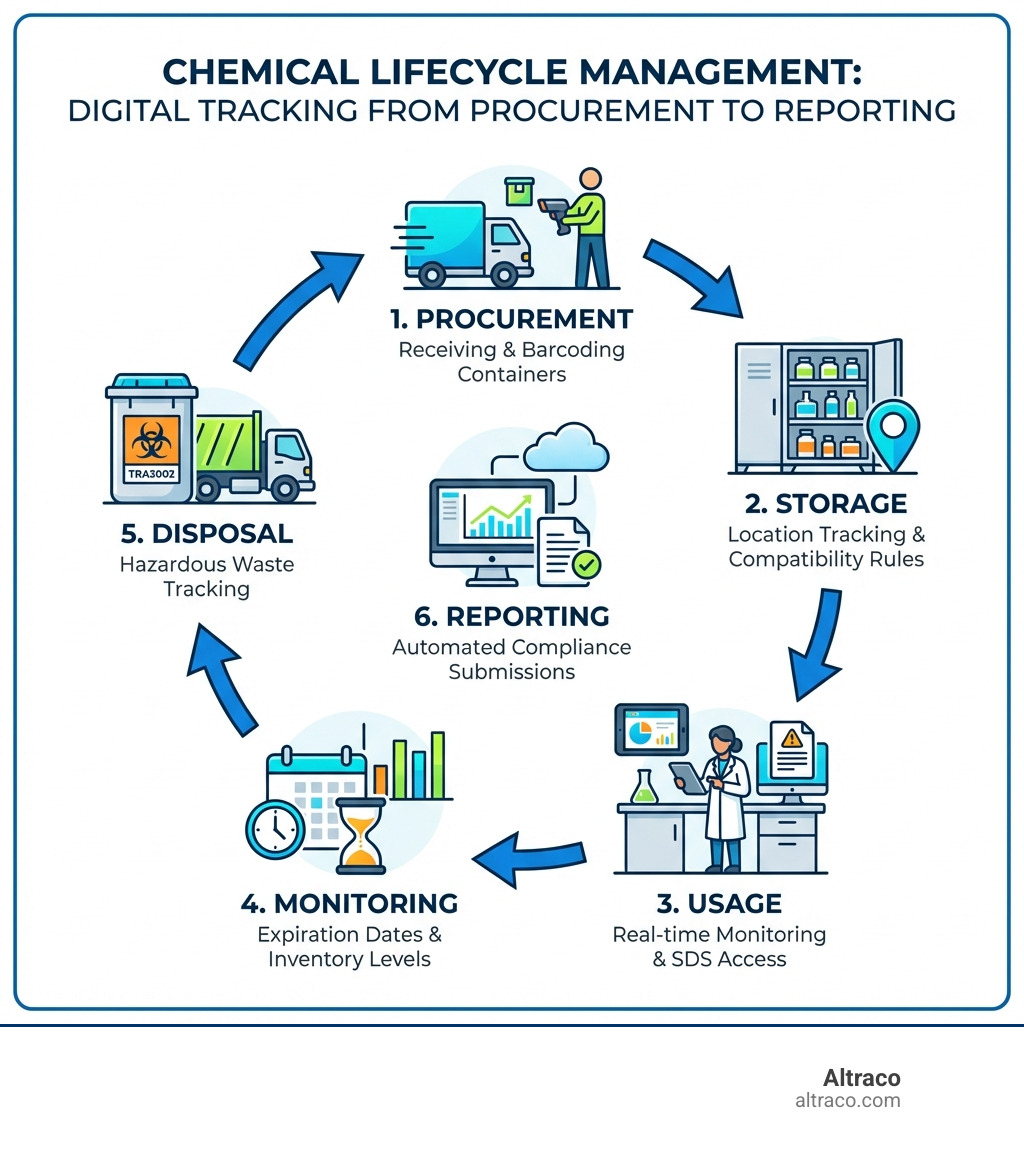
Chemical inventory management software is a digital platform that tracks chemicals from procurement to disposal. It provides real-time visibility into what’s on-site, where it’s stored, and if it meets safety and regulatory requirements. Key functions include:
- Tracking chemicals at the container level
- Ensuring compliance with regulations like OSHA and EPA
- Integrating Safety Data Sheets (SDS) for instant hazard information
- Generating automated reports for audits
- Reducing costs by preventing duplicate purchases
- Improving safety by monitoring incompatible chemical storage
- Offering mobile access with barcode/RFID scanning
The global market for this technology is projected to reach $2.1 billion by 2030, yet many organizations still use manual spreadsheets, creating significant risks. Lacking digital processes can lead to excessive purchasing, unsafe storage, and missing chemicals, driving up costs and regulatory exposure.
Manual tracking creates data silos, invites human error, and makes compliance a nightmare. When auditors or emergency responders need information, you can’t afford to be digging through paper logs.
Digital change is about protecting your people and operations. Companies using these systems see purchasing costs drop by up to 15%, compliance accuracy improve, and operational efficiency increase by 25%. The right software turns chaos into control.
I’m Albert Brenner, and with over 40 years in manufacturing for Fortune 500 companies—including automotive parts and sporting goods—I’ve seen how critical inventory visibility is. Just as manufacturers need precise tracking, labs require robust chemical inventory software to maintain safety and regulatory standards.
Simple guide to chemical inventory management software terms:
From Spreadsheets to Software: What is Chemical Inventory Management?
Managing a chemical inventory is like tracking every ingredient for a restaurant chain, ensuring each is stored correctly, used before expiring, and compliant with health regulations. Chemical inventory management software is a specialized digital system that oversees the entire lifecycle of chemicals in a facility. From procurement through disposal, it provides a centralized database with real-time, container-level tracking of quantity, location, expiration dates, and Safety Data Sheets (SDS).
With hazardous materials, precision is a necessity. This software ensures regulatory compliance, improves safety, and boosts efficiency. The global market reflects this, projected to reach $2.1 billion by 2030. This growth shows that effective chemical management is a fundamental requirement for responsible operations.

The Digital Leap: Why Spreadsheets and Paper Logs Fall Short
Many organizations still rely on manual or spreadsheet-based methods, which seem cost-effective but create inefficiencies and dangers. An estimated 30-40% of organizations use these traditional methods, creating significant vulnerabilities.
Here’s why the digital leap is essential:
| Feature | Manual/Spreadsheet Methods | Chemical Inventory Software |
|---|---|---|
| Accuracy | Prone to human error, outdated entries, transcription mistakes. | Automated data entry, real-time updates, reduced errors. |
| Accessibility | Limited to physical location or specific files; difficult to share. | Cloud-based access, mobile availability, instant sharing. |
| Compliance | Manual data compilation, time-consuming, high risk of non-compliance. | Automated reporting, cross-references regulatory lists, audit-ready. |
| Safety | Difficult to track incompatibilities, expiration dates; slow emergency response. | Flags incompatibilities, tracks expiry, instant SDS access, emergency data sharing. |
| Reporting | Labor-intensive, custom reports difficult, static data. | One-click reports, customizable, dynamic, historical data. |
| Efficiency | Slow, redundant data entry, inefficient purchasing. | Streamlined workflows, optimized purchasing, time savings. |
| Cost | Hidden costs in labor, errors, fines, wasted chemicals. | Upfront investment, but significant long-term ROI. |
Manual tracking results in data silos, making a holistic inventory view impossible. Human error can lead to incorrect quantities or overlooked hazards, creating headaches during audits and potential penalties. Without real-time data, purchasing is inefficient, leading to accidental reorders and unnecessary costs.
The Importance for Modern Laboratories and Manufacturing
In labs and manufacturing, the stakes for chemical management are high. It’s about safeguarding your team, protecting the environment, and maintaining operational integrity.
Handling hazardous materials demands meticulous tracking of storage requirements and incompatibilities. Chemical inventory management software contributes to Industrial Quality Control by ensuring chemicals are stored and used under optimal conditions, preventing accidents that could compromise production.
Emergency preparedness is also critical. In a spill or fire, first responders need immediate, accurate data on chemical locations, quantities, and hazards. US EPA regulations and fire codes mandate this reporting for a reason—providing this from a paper log during an emergency is not feasible.
Effective inventory management also leads to cost control. Real-time visibility prevents redundant purchases and reduces waste from expired chemicals, with some companies seeing purchasing costs drop by up to 15%. Finally, protecting personnel is paramount. Instant access to SDS, clear labeling, and tracking of incompatible storage create a safer work environment.
The Anatomy of a Modern System: Core Features to Look For
Modern chemical inventory management software is more than a digital ledger; it’s a sophisticated ecosystem of features for comprehensive control. Key components include a centralized dashboard for an at-a-glance overview, a robust chemical database with detailed substance information (CAS numbers, hazard classifications), and user roles for security and accountability. Scalability is also crucial, ensuring the software can grow with your organization, whether you’re a small lab in Los Angeles or a large manufacturer in Long Beach.

Mobile Access and Barcode/RFID Scanning
Mobile access with barcode and RFID scanning is a game-changer for efficiency. It allows staff in a lab or warehouse in Thousand Oaks, CA, to log deliveries or update quantities directly from a tablet or smartphone. The benefits are clear:
- Real-time Updates: The central database is updated instantly when an item is scanned.
- Field Data Entry: Data is entered at the source, reducing errors and saving time.
- Reduced Errors: Scanning automates identification, ensuring accuracy.
- Increased Speed: Tasks that took minutes now take seconds.
The integration of Barcoding Inventory Management Software is fundamental. Each container gets a unique barcode or RFID tag. When scanned, the tag pulls up all associated information. RFID technology allows for even faster, bulk scanning without a direct line-of-sight. This mobile control transforms inventory management into a seamless, accurate process.
Streamlining Regulatory Reporting and Audits
Navigating regulatory requirements from agencies like the US EPA and local California fire departments is a major challenge. Chemical inventory management software simplifies this by automating report generation. It can produce audit-ready reports like Tier II (EPCRA), SARA 313, and Hazardous Material Business Plans (HMBP) with a few clicks.
Many systems cross-reference chemicals against regulatory lists, flagging substances that require special attention and tracking maximum allowable quantities (MAQs). They also create comprehensive audit trails, documenting every chemical interaction. This transparency is invaluable during an inspection. GHS labeling features ensure containers are correctly marked, improving hazard communication and reducing fine risk by up to 20%.
Integration with SDS and Waste Management
The true power of this software lies in its integration with other EH&S functions, especially Safety Data Sheet (SDS) management and hazardous waste tracking. This creates a “cradle-to-grave” system for chemicals.
An integrated SDS database is non-negotiable, providing instant access to hazard information, handling precautions, and disposal guidelines. This ensures GHS compliance and keeps workers informed.
Integrating with waste tracking modules helps manage disposal with precision. The software can track waste streams, generate manifests, and ensure compliance with disposal regulations. Advanced systems also include chemical approval workflows and compatibility rules, preventing dangerous storage situations before they happen. This holistic approach revolutionizes chemical management. For a deeper dive, Watch a Demo of Inventory Management Solutions.
Choosing the Right Chemical Inventory Management Software for Your Organization
Selecting the ideal chemical inventory management software requires a structured approach to find a solution that fits your needs and budget. It’s about finding a partner, not just a product.
Start with a thorough needs assessment: What are your biggest pain points? Is it compliance reporting, tracking expiration dates, or gaining real-time visibility? This will help prioritize features. Consider the total cost of ownership, including implementation, training, and support, not just the initial price. Finally, evaluate vendor support and the implementation process. A smooth data migration and comprehensive training are crucial for successful adoption.
Key Considerations for Your Specific Needs
Every organization is unique, so tailor your software choice to your specific context.
- Organization Size: A small lab may need a simple solution, while a multi-site enterprise across California will require robust, centralized management features.
- Industry Focus: A research lab’s needs differ from a plant manufacturing automotive parts or home improvement products. Some software is geared toward scientists, while others focus on industrial compliance.
- Existing Systems: How well will the new software integrate with your current ERP, LIMS, or SDS platforms? Seamless integration is key to efficiency.
- Users and Roles: Consider how many people need access and what permissions they require to maintain data integrity.
- Regulatory Needs: Does the software support specific reporting for DHS, SARA, HMBP, or other regulations you must adhere to?
- Data Security: Ensure the software, especially if cloud-based, has robust security to protect sensitive inventory data.
Evaluating these factors helps select a chemical inventory management software that is truly optimized for your operations.
Cloud-Based vs. On-Premise: Selecting Your Deployment Model
A fundamental decision is the deployment model: cloud-based (SaaS) or on-premise. The best choice depends on your IT infrastructure, budget, and control preferences.
Cloud-Based (SaaS) solutions are popular for their accessibility from any internet-connected device, automatic vendor-managed updates, and lower initial costs via a subscription model. They are also highly scalable and reduce the burden on your internal IT team.
On-Premise Solutions offer greater control over data and server infrastructure, which is crucial for organizations with stringent security policies. This model ensures data sovereignty and often allows for deeper customization. However, it requires more internal resources to manage.
The decision is a trade-off between the convenience of the cloud and the control of an on-premise system.
The ROI of Digitization: Open uping Tangible Benefits
Implementing chemical inventory management software is a strategic investment that yields significant returns. The return on investment (ROI) comes from direct cost savings, efficiency gains, and reduced risk, impacting your bottom line and protecting your people.
Moving from manual, error-prone systems to an automated platform provides peace of mind. Optimized purchasing can cut chemical costs by up to 15%. Automating data entry, reporting, and reconciliation frees up valuable labor, potentially increasing operational efficiency by 25%. Most importantly, proactive hazard management and streamlined compliance create a safer work environment and reduce the risk of costly fines.
Enhancing Safety, Compliance, and Efficiency
Chemical inventory management software drives simultaneous improvements in safety, compliance, and efficiency.
- Safety: The software provides proactive risk management by flagging incompatible chemicals, tracking expiration dates, and ensuring proper GHS labeling. In an emergency, instant access to hazard data empowers first responders to act effectively.
- Compliance: The software automates the generation of audit-ready reports like Tier II, cross-references inventory against regulatory lists, and ensures compliance with bodies like the US EPA. This improves reporting accuracy and can reduce the risk of fines by up to 20%.
- Efficiency: Streamlined workflows save time and money. The software eliminates redundant data entry and provides real-time visibility to optimize purchasing. This can lead to a 25% increase in operational efficiency, allowing teams to focus on core work.
Calculating the ROI of Chemical Inventory Management Software
The ROI for this software is significant and quantifiable in several key areas.
First, reduced purchasing costs of up to 15% are achievable by eliminating reorders of chemicals already in stock. Accurate, real-time inventory tracking makes this possible.
Next, you’ll see lower disposal fees. By tracking expiration dates, the software helps ensure chemicals are used before they become hazardous waste, minimizing costly disposal.
A compelling benefit is the avoidance of regulatory fines. Non-compliance can result in hefty penalties. Better reporting accuracy can reduce fine risk by up to 20%.
Finally, consider labor cost savings. Automating manual inventory tasks frees up staff to focus on primary responsibilities. This improved efficiency allows for better allocation of human and financial resources.
Conclusion: Integrating Control from the Lab to the Global Supply Chain
Chemical inventory management software transforms lab operations by improving safety, ensuring compliance, and boosting efficiency. The move from spreadsheets to intelligent, streamlined systems is essential for any organization handling chemicals, providing a healthier bottom line and a more secure work environment. Real-time visibility and automated reporting are no longer luxuries but necessities.
Just as this software provides critical oversight in the lab, a robust Integrated Supply Chain Services partner like Altraco offers essential control over global manufacturing. We apply the same principles of tracking, compliance, and quality control to complex offshore production for industries like automotive parts, sporting goods, home improvement, and outdoor products.
Our expertise ensures every component is managed with precision. We simplify global supply chains through trusted factory relationships and expert tariff navigation, delivering quality, on-time products with significant cost savings for our clients, including Fortune 500s. We manage contract manufacturing in countries like Mexico, China, and Vietnam, helping clients steer current events like tariff changes and Supreme Court decisions to find reliable solutions outside the United States.
From our base in Thousand Oaks, CA, to our operations in Los Angeles and Long Beach, we know that control and transparency are paramount. Whether it’s a chemical in your lab or a shipment of parts from overseas, knowing what you have, where it is, and that it’s compliant is the key to success.

Al is an entrepreneur, founder, and owner of multiple businesses, including Altraco, an outsourcing and contract manufacturing company. Working across multiple continents and trusted by Fortune 500 companies, Al finds innovative solutions to traditional supply chain challenges. He is a member of Vistage Worldwide.