Why Integrating ERP and SCM is Crucial for Modern Logistics
In today’s complex global market, integrating enterprise resource planning and supply chain management is key to success. Companies face numerous challenges, from managing overseas factories and navigating tariffs to ensuring on-time product delivery.
So, what is the role of Enterprise Resource Planning (ERP) in Supply Chain Management (SCM)?
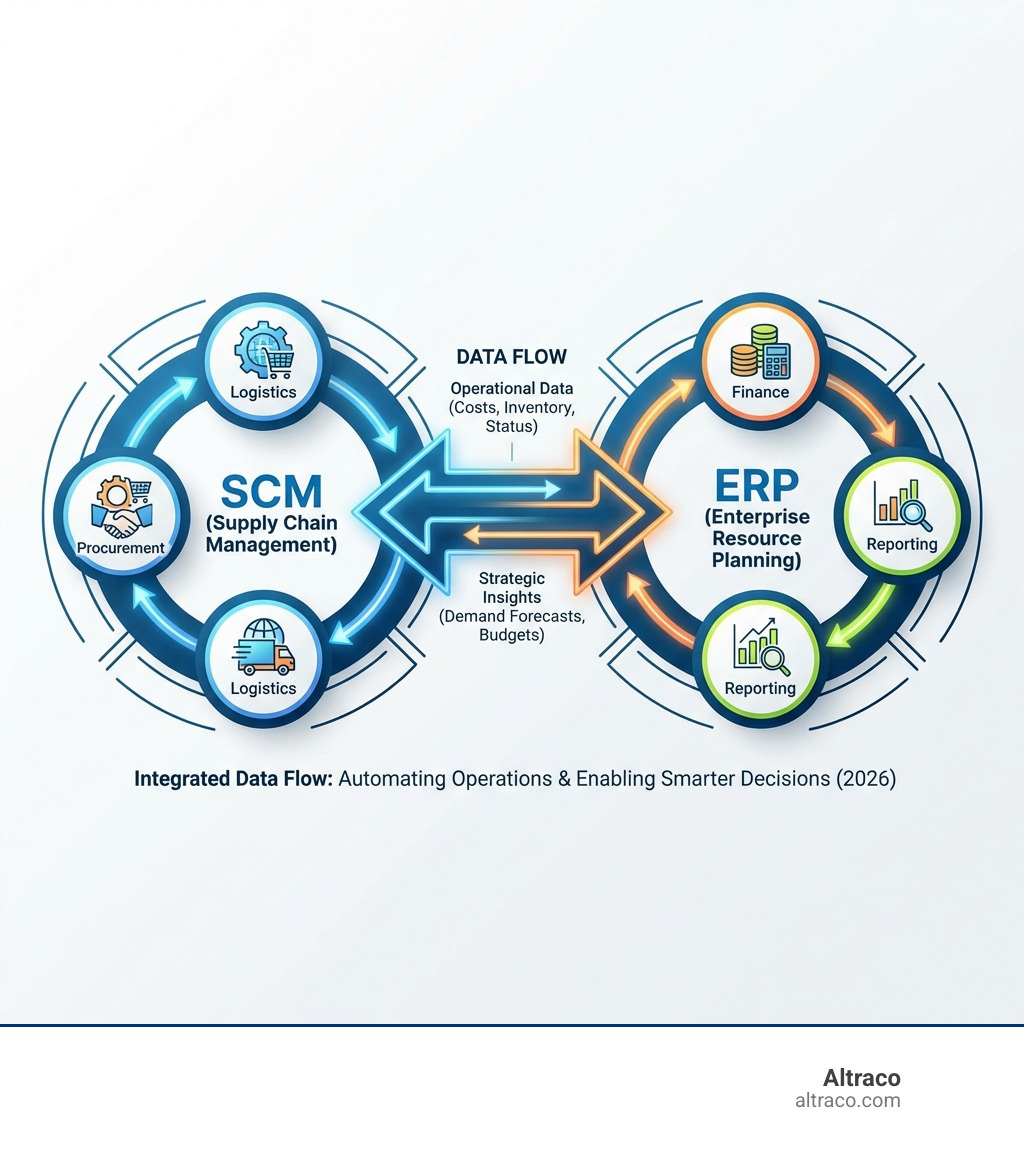
- ERP (Enterprise Resource Planning): The central “brain” of a business, integrating core data and processes like finance, HR, and manufacturing.
- SCM (Supply Chain Management): The operational “muscle” that handles the entire flow of goods, from raw materials to customer delivery.
- Together: ERP provides real-time data to SCM, which automates tasks, boosts visibility, and enables smarter decisions. This integration results in greater efficiency, lower costs, and improved business resilience.
As a co-owner of a contract manufacturing company, I help clients manage complex production needs. Our firm uses its experience in enterprise resource planning and supply chain management to ensure quality and on-time delivery for offshore manufacturing in industries like home improvement, sporting goods, automotive parts, and outdoor products.
Enterprise resource planning and supply chain management word roundup:
Explaining the Core Components: ERP vs. SCM
To understand the power of integrating enterprise resource planning and supply chain management, we must first grasp what each system does. While distinct, they are complementary systems that, when connected, open up a new level of operational excellence.

What is Enterprise Resource Planning (ERP)?
Enterprise Resource Planning (ERP) is a software platform companies use to manage and integrate essential business functions. Often called the “central nervous system” of an organization, an ERP system unifies core processes like finance, HR, manufacturing, and sales into a single system.
This solves the problem of siloed data, where different departments use incompatible software. By creating a “single source of truth,” an ERP allows teams to share consistent, real-time information. For instance, the manufacturing team can instantly check inventory levels for a new batch of sporting goods, as the data is integrated with procurement, production schedules, and sales forecasts. This holistic view makes ERP the backbone of modern business information processing. As SAP notes, ERP is core to handling major business processes. You can learn more in What is ERP? The Essential Guide.
What is Supply Chain Management (SCM)?
If ERP is the brain, Supply Chain Management (SCM) is the “muscle” that executes the flow of goods and services. SCM covers all processes that turn raw materials into final products and deliver them to customers.
The core components of SCM are:
- Sourcing: Identifying and evaluating suppliers.
- Procurement: Acquiring materials through negotiations and contracts.
- Conversion: The manufacturing process, such as for home improvement and automotive parts.
- Logistics: Planning and executing the movement of goods, including warehousing and distribution. Learn more in our guide on Logistics Management Activities.
SCM requires extensive coordination with external partners like suppliers, service providers, and customers, which is vital for success in global sourcing.
Key Differences: When Do You Need One vs. Both?
ERP and SCM have distinct focuses. ERP is inward-looking, optimizing internal processes, while SCM is outward-looking, managing the flow of goods and information across the entire network.
Here’s a quick comparison:
| Feature | Enterprise Resource Planning (ERP) | Supply Chain Management (SCM) |
|---|---|---|
| Primary Focus | Enterprise-wide integration of internal business processes | Optimization of the flow of goods and information across the network |
| Core Functions | Finance, HR, Manufacturing, Sales, Procurement, CRM | Planning, Sourcing, Procurement, Conversion, Logistics, Delivery |
| Data Scope | Internal business data (financials, employee records, production) | External partner data (supplier performance, shipment tracking, demand forecasts) |
| Decision Focus | Operational efficiency, resource allocation, internal reporting | Market responsiveness, cost reduction, customer satisfaction, risk mitigation |
A small business might start with an ERP for internal operations. However, once a business sources globally, manages complex manufacturing for outdoor products, or deals with intricate distribution, an integrated SCM solution becomes essential. The integration of enterprise resource planning and supply chain management creates a powerful synergy, driving competitive advantage in today’s global marketplace.
The Power of Synergy: How Enterprise Resource Planning and Supply Chain Management Integrate
The real magic happens when ERP and SCM systems are deeply integrated. This transforms them into a cohesive engine that drives efficiency, visibility, and strategic decision-making across the entire organization and its extended network.
How ERP Improves Efficiency in Supply Chain Operations
An ERP system acts as a powerful amplifier for supply chain efficiency by centralizing data and automating processes.
- Automation of Routine Tasks: ERP automates tasks like inventory tracking and purchase order generation, reducing manual effort and human error. This frees up teams to focus on more strategic activities.
- Real-time Visibility and End-to-End Tracking: ERP provides a holistic, real-time picture of performance. We can track raw materials from suppliers in Mexico or China through production and final delivery of home improvement products.
- Improved Demand Forecasting: Better visibility into supply and demand facilitates more accurate forecasting. This is crucial for optimizing inventory for items like automotive parts without holding excessive stock.
- Better Inventory Management: ERP improves Inventory Management Solutions with real-time visibility and control. It automates reordering and optimizes stock levels, saving warehouse space and costs. For example, Green Rabbit cut inventory errors and tripled its order volume after implementing ERP software.
- Identifying Bottlenecks and Streamlining Production: By providing a clear view of capacity and material availability, ERP helps identify bottlenecks. This allows for proactive resource allocation to keep production of outdoor products on schedule.
Key Benefits of Integrating ERP and SCM
The integration of enterprise resource planning and supply chain management delivers a multitude of benefits, giving companies a significant competitive edge.
- Cost Reduction: Optimizing inventory, streamlining procurement, and automating processes lead to substantial cost savings and reduced administrative burdens.
- Optimized Inventory and Warehouse Space Savings: Real-time data enables just-in-time inventory strategies, reducing the need for large, costly warehouses and lowering storage costs.
- Increased Agility and Responsiveness: Integrated systems provide the data needed to quickly respond to market changes or supply disruptions, which is vital for resilience in global supply chains.
- Improved Collaboration: A unified platform breaks down departmental silos, fostering better collaboration between internal teams and external partners.
- Improved Customer Satisfaction: Better planning and more accurate delivery estimates lead to consistently meeting customer expectations, increasing retention and loyalty.
- Increased Data Accuracy and Consistency: Centralizing data on one platform ensures everyone works with current, accurate information, which is fundamental for reliable decision-making.
For a deeper dive into how these systems can work together, explore our comprehensive services on Integrated Supply Chain Services.
Strategic Implementation: Choosing and Deploying an ERP for Your Supply Chain
Choosing and deploying an ERP to improve enterprise resource planning and supply chain management is a significant strategic decision. It’s about aligning technology with business goals, especially for complex operations like offshore contract manufacturing.
Types of ERP Systems for Modern Manufacturing
The ERP landscape offers various systems for diverse business needs. For manufacturing in home improvement, sporting goods, automotive parts, and outdoor products, understanding these types is crucial.
- On-Premise ERP: Installed on a company’s own servers, this offers maximum control but requires significant upfront costs and ongoing maintenance. It is becoming less common but can be viable for specific security needs.
- Cloud-Based ERP: Hosted by a vendor and accessed online, these solutions are popular for their scalability, accessibility, and lower upfront investment. They are ideal for businesses expanding globally, allowing access from anywhere.
- Industry-Specific ERP: These are custom to an industry’s unique needs. For manufacturing, they can provide specialized modules for production scheduling, quality control, and compliance that general ERPs may lack.
- Tiered ERP Systems: These offer different levels of functionality, allowing businesses to choose a tier that matches their current needs and budget, with options to upgrade. This is a flexible approach for managing Offshore Manufacturing and Supply Chain Support.
Critical Factors for Choosing the Right System
When selecting an ERP for your supply chain, consider these critical factors:
- Scalability for Global Growth: The system must scale with growth, supporting multiple languages, currencies, and tax regimes for partners in countries like Mexico, China, or Vietnam.
- Integration with Existing Tools: It should integrate with other software like Warehouse Management Systems (WMS) to unify data, not create more silos.
- Customization Capabilities: The ERP should offer enough customization to adapt to your workflows without requiring costly modifications.
- Data Security and Compliance: Robust data security and compliance with international regulations are non-negotiable.
- User Experience and Adoption: A user-friendly interface is crucial for employee adoption and minimizing resistance to change.
- Vendor Support and Maintenance: A reliable vendor partner is essential for support, training, and ensuring the system evolves with your business.
When Should a Business Implement an ERP for its Supply Chain?
The decision to implement an ERP is often driven by growth, complexity, and inefficiency.
- Growth Triggers: When revenue approaches or exceeds $10 million, manual processes often become unsustainable.
- Operational Inefficiencies: Persistent manual workarounds, data re-entry, and excessive paperwork are clear signs you need an integrated system.
- Increased Complexity: Expanding product lines, customer bases, or geographic reach through Global Sourcing makes managing disparate systems a nightmare. This is especially true for offshore manufacturing of diverse products like sporting goods or automotive parts.
- Lack of Real-time Data for Decision-Making: If you’re making decisions based on outdated information, an ERP can provide the real-time data needed to be proactive.
Implementing an ERP is an investment in future growth and resilience, laying a foundation to support complex global operations.
The Future is Now: Modern ERP Solutions and Emerging Technologies
The landscape of enterprise resource planning and supply chain management is evolving, propelled by technology. Modern ERP solutions are becoming intelligent, adaptive platforms that leverage cutting-edge tech to create more resilient, transparent, and efficient global supply chains.
The Role of Cloud-Based ERP in Global Supply Chains
Cloud-based ERP solutions are a cornerstone for modern global supply chains, offering key advantages for businesses managing offshore manufacturing in locations like Mexico, China, and Vietnam.
- Real-time Data Access and Collaboration: Cloud ERP provides instant access to data from anywhere, allowing teams in Thousand Oaks, CA, to collaborate with overseas partners in real time.
- Flexibility and Agility: Cloud solutions allow businesses to quickly adapt to market changes or supply chain disruptions, a crucial factor when considering the risks of Supply Chain Globalization: Is It Worth the Risk?.
- Streamlined Maintenance and Updates: The vendor handles maintenance and updates, freeing up internal IT resources and ensuring access to the latest features.
- Improved Capabilities for Global Operations: Cloud ERPs inherently support multi-currency, multi-language, and complex tax regimes, simplifying international compliance for products like home improvement and automotive parts.
How AI and Emerging Tech are Shaping the Future of Enterprise Resource Planning and Supply Chain Management
Technologies like Artificial Intelligence (AI), the Internet of Things (IoT), and Blockchain are reshaping how ERP systems improve SCM.
- Artificial Intelligence (AI): AI revolutionizes demand forecasting by analyzing vast datasets to predict demand with greater accuracy. This helps optimize inventory for products like outdoor gear and makes supply chains more proactive.
- Internet of Things (IoT): IoT sensors on containers or in warehouses provide real-time data on asset location and condition. Integrated with ERP, this offers unprecedented visibility into the movement of goods like automotive parts.
- Blockchain for Transparency and Traceability: Blockchain offers a secure, immutable ledger for all transactions. This provides unparalleled traceability for industries like home improvement, reducing fraud and improving trust.
Statistics show that by 2026, 80% of supply chains will have the advanced visibility and analytics needed for resilience, highlighting the power of these integrated technologies.
Real-World Success Stories
The impact of integrating enterprise resource planning and supply chain management is clear in many success stories:
- Toyota Material Handling India: Switched to cloud ERP and achieved a single view of inventory across multiple locations, increasing productivity and optimizing resources.
- Green Rabbit: Implemented ERP to cut inventory errors and triple its order volume, showcasing how the software can scale operations.
- Alterra Mountain Company: Used an ERP asset management solution to simplify preventative maintenance and make better-informed investment decisions.
These examples show how strategic ERP investment leads to tangible improvements. For more insights, you can Learn more about ERP’s role in SCM.
Frequently Asked Questions about ERP and SCM
Here are answers to common questions about enterprise resource planning and supply chain management.
How does ERP improve inventory management?
ERP systems transform inventory management by providing real-time visibility and control over stock levels. This allows you to see exact quantities of components for sporting goods or raw materials for outdoor products from a single dashboard, eliminating guesswork and reducing errors.
ERP also automates reorder processes based on predefined thresholds and sales forecasts. This ensures production lines for items like home improvement products have the materials they need, which optimizes stock levels, reduces carrying costs, and prevents costly stockouts.
What are the primary weaknesses of an ERP system?
While powerful, ERP systems have potential challenges:
- High Initial Cost and Complexity: ERPs can require significant upfront investment in software, hardware, and implementation services. Integrating all business functions is a complex task.
- Resistance to Change: Employees may be reluctant to adopt new systems and processes, which can hinder productivity and lead to implementation failure if not managed well.
- Risk of Implementation Failure: ERP projects are complex. Without careful planning and management, they can suffer from cost overruns, delays, or fail to deliver the expected benefits.
How long does it take to implement an ERP for supply chain management?
The implementation timeline varies based on a company’s size and complexity.
- Smaller Businesses: Typically 3-6 months.
- Medium-Sized Businesses: Usually 6 to 12 months.
- Large, Complex Enterprises: For large organizations with global operations in places like Mexico and Vietnam, the process can take 12-24 months.
Factors like system complexity, customization, and data migration efforts influence the timeline. Proper planning is crucial for a timely and successful implementation.
Conclusion
Integrating enterprise resource planning and supply chain management is a foundational pillar for modern business success. ERP acts as the central brain, providing a single source of truth, while SCM is the brawn, managing the flow of goods across the global network. Together, they create a synergy that drives efficiency, visibility, and agility.
This integration is a competitive necessity, enabling cost reduction, inventory optimization, and superior customer satisfaction. As technologies like AI and the cloud advance, the capabilities of integrated ERP and SCM continue to expand, promising greater resilience in a complex global market.
For businesses in the home improvement, sporting goods, automotive parts, and outdoor products industries, leveraging these efficiencies through Contract Manufacturing Services requires a partner with deep expertise in global complexities and tariff navigation. Altraco simplifies these challenges, ensuring quality, on-time products with significant cost savings for our clients, from our base in Thousand Oaks, CA, to our partners in Mexico, China, and Vietnam.
To build a more resilient and efficient global supply chain, explore our Integrated Supply Chain Services. Let us help you harness the power of integrated enterprise resource planning and supply chain management to drive your business forward.

Al is an entrepreneur, founder, and owner of multiple businesses, including Altraco, an outsourcing and contract manufacturing company. Working across multiple continents and trusted by Fortune 500 companies, Al finds innovative solutions to traditional supply chain challenges. He is a member of Vistage Worldwide.