Introduction: Tapping into the Booming CBD Market
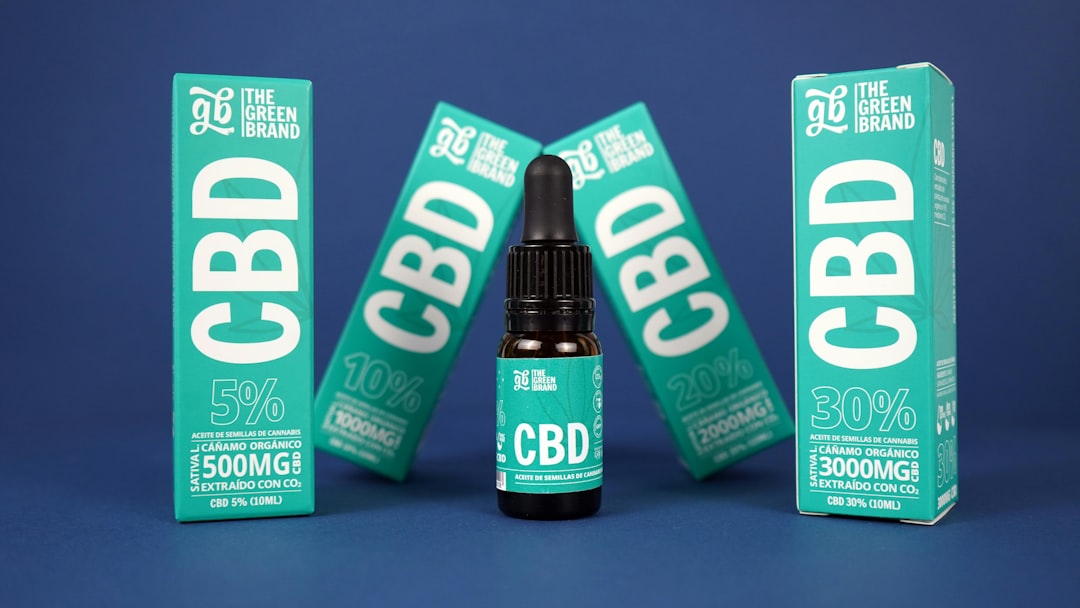
Private label CBD products allow businesses to brand and sell CBD items—such as tinctures, gummies, topicals, and capsules—manufactured by a third-party partner, without the need to build your own production facility. Here’s what you need to know:
- Private Label: Custom-formulated products unique to your brand, offering full control over ingredients, formulation, and branding.
- White Label: Pre-made products you rebrand with your logo, enabling faster market entry with lower minimum order quantities (MOQs).
- Key Benefits: Lower upfront investment, faster time to market, access to expert manufacturing, and the ability to focus on branding and sales.
- Typical MOQs: White label starts around 100-200 units; private label typically requires 200-1,000+ units depending on customization.
The CBD market is experiencing explosive growth, with global sales projected to reach $5.3 billion by 2025. For businesses looking to capitalize on this opportunity, private labeling offers a strategic entry point. Instead of investing heavily in manufacturing infrastructure, you can partner with an experienced manufacturer to create high-quality CBD products under your own brand.
This model is especially attractive for Fortune 500 companies and large enterprises already managing complex supply chains. Many businesses successfully use contract manufacturing for products ranging from home improvement items to automotive parts, and the same principles apply to CBD. The challenge lies in finding a manufacturer who can deliver consistent quality, steer regulatory requirements, and scale production as your brand grows.
The core decision you’ll face is between white labeling (rebranding an existing product for quick market entry) and private labeling (creating a custom formulation that’s uniquely yours). White label offers speed and lower risk with MOQs as low as 100 units, but results in a generic product identical to competitors. Private label requires higher minimums and longer lead times, but delivers a differentiated product with higher profit potential.
I’m Albert Brenner, co-owner of Altraco, a contract manufacturing company with over 40 years of experience helping businesses bring products to market through strategic partnerships. At Altraco, we’ve helped Fortune 500 companies navigate offshore manufacturing complexities, specializing in home improvement, sporting goods, automotive parts, and outdoor products. While our core expertise lies in these sectors, the principles of quality manufacturing and supply chain management apply directly to private label CBD products. We offer contract manufacturing services in Mexico, China, Vietnam, and can establish trusted relationships in other countries to help manage costs and navigate tariff challenges, including those arising from recent United States Supreme Court decisions regarding tariffs. Whether you’re manufacturing domestically or considering offshore production to optimize your supply chain, the fundamentals of vetting suppliers, ensuring quality control, and scaling production remain the same.
Understanding Your Options: Private Label vs. White Label CBD
When diving into private label CBD products, one of the first distinctions we need to make is between private label and white label. While often used interchangeably, they represent two different approaches to bringing products to market, each with its own set of advantages and considerations.
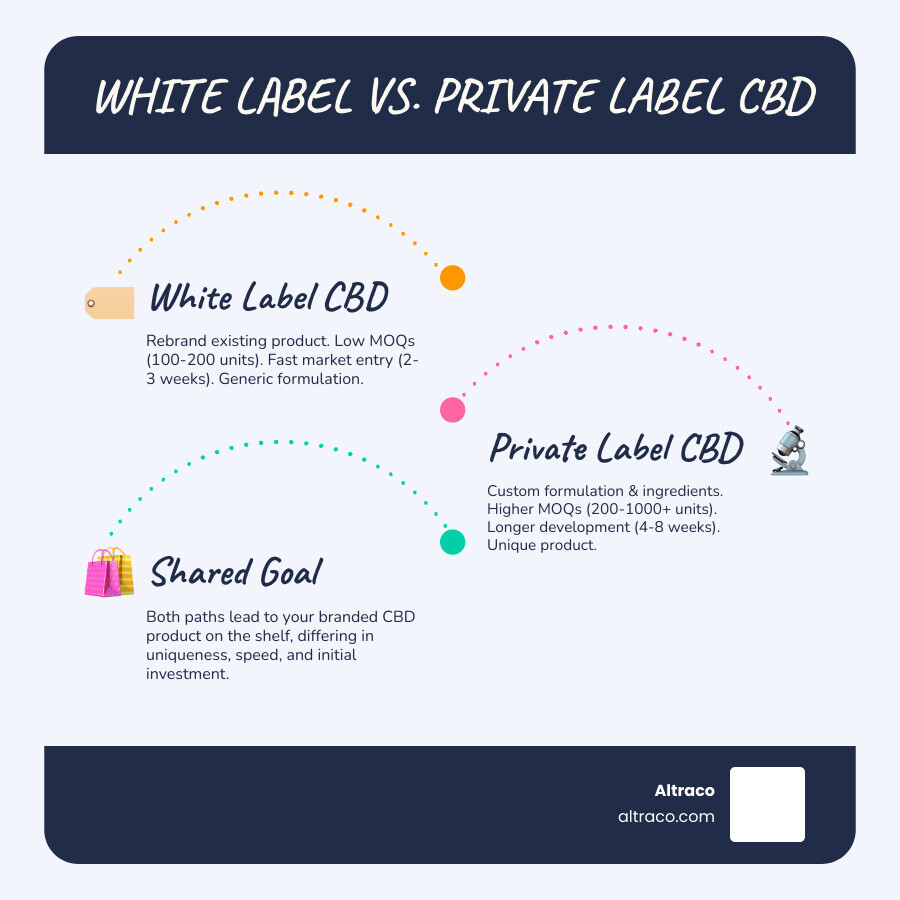
White labeling is essentially rebranding an existing, generic product. A manufacturer produces a standard CBD product—say, a tincture or a gummy—and offers it to various businesses. These businesses then apply their own brand name, logo, and labels to the product. It’s the quickest route to market, offering low risk and often very low minimum order quantities (MOQs). This means you can launch your brand with minimal upfront investment, often with products ready to ship in as little as two weeks. The drawback? Your product isn’t unique; it’s the same formulation that other brands might be selling, making differentiation solely dependent on your marketing and branding efforts.
Private labeling, on the other hand, involves a deeper level of customization and partnership. Here, we work with a manufacturer to develop a product that is unique to our brand. This can mean custom formulations, specific ingredient selections, unique flavors, or even bringing our own proprietary recipes to the table. While it requires a higher MOQ and longer lead times for development and production, the result is a truly differentiated product that stands out in a crowded market. This approach offers more control and potential for innovation, allowing us to build a distinctive brand identity and product experience.
Here’s a quick comparison to help clarify the differences:
| Feature | White Label CBD | Private Label CBD |
|---|---|---|
| Customization | Minimal; generic product, custom branding only | High; custom formulation, ingredients, flavors, packaging |
| Speed to Market | Fast (2-3 weeks) | Slower (4-8+ weeks for development) |
| MOQs | Low (e.g., 100-200 units) | Higher (e.g., 200-1000+ units) |
| Cost | Lower per unit for small batches | Potentially lower per unit for larger, bulk orders |
| Differentiation | Primarily through branding and marketing | Through unique product, branding, and marketing |
| Control | Limited over product formulation | Full control over formulation and ingredients |
| Risk | Lower initial investment, lower risk | Higher initial investment, higher potential reward |
For a more in-depth look at white label products, you can explore our guide on More info about white label products.
The Strategic Advantages of Launching Your Own CBD Brand
The CBD market is a vibrant and expanding landscape, and launching our own brand of private label CBD products offers a compelling strategic advantage. The benefits extend beyond simply putting our logo on a product; they tap into core business growth principles.
One of the most significant advantages is brand control. With private labeling, we dictate the product’s identity, quality, and message from the ground up. This allows us to cultivate a unique brand story and build a loyal customer base that resonates with our specific values and offerings. For instance, if our brand focuses on organic, ethically sourced ingredients, private labeling ensures every component aligns with that vision.
This control also translates into the potential for higher profit margins. While white labeling offers a quick entry, the generic nature of the product often leads to price competition. A unique, custom-formulated private label product, however, can command premium pricing, as it offers something distinct that competitors cannot easily replicate. Once a strong partnership is established and we’re ordering in bulk, the cost per item for private label products can often be more favorable than white label options.
The market opportunity for CBD is immense and continues to grow. Global sales are projected to reach $5.3 billion by 2025, a significant jump from $967.2 million in 2020. This growth isn’t just about volume; it’s about diverse demographics. For example, Forbes highlighted in 2019 how the market was expanding to include Baby Boomers, indicating a broadening consumer base beyond early adopters. This broad appeal means there’s ample room for brands to carve out specific niches.
These factors contribute to stronger customer loyalty. When we offer a high-quality, unique product that consistently meets our customers’ needs and expectations, we build trust and repeat business. This is the bedrock of long-term success in any industry, and especially in a wellness-focused market like CBD where product efficacy and transparency are paramount.
The range of private label CBD products we can offer is diverse, catering to various consumer preferences and needs. Here are some common product categories:
- Tinctures & Oils: These are perhaps the most popular form, offering versatile dosing and various concentrations (e.g., full-spectrum, broad-spectrum, isolate). They can come in different flavors and carrier oils.
- Gummies & Edibles: A convenient and discreet way to consume CBD, often available in various flavors, shapes, and potencies. These can range from traditional gummies to other infused treats.
- Topicals & Balms: Applied directly to the skin, these include creams, salves, lotions, and massage oils designed for localized relief. They often incorporate other beneficial ingredients.
- Capsules & Softgels: Offering precise dosing and ease of consumption, these are a popular choice for those who prefer a taste-free option.
- Pet Products: CBD is increasingly popular for pets, with products like tinctures, treats, and balms custom for animal consumption.
- Specialty Products: This can include innovative options like water-soluble CBD, bath bombs, suppositories, or even products incorporating minor cannabinoids like CBG and CBN, which are gaining attention for their unique properties.
Your 5-Step Guide to Launching a Private Label CBD Business
Launching a successful private label CBD products business might seem daunting, but by breaking it down into manageable steps, we can steer the process effectively. Think of it as a journey from a great idea to a thriving brand.

This systematic approach helps us leverage the benefits of private labeling while mitigating the inherent complexities. It’s a journey that benefits greatly from a strong New Product Introduction process, ensuring that every stage is carefully planned and executed.
Step 1: Define Your Brand and Product Line
This is where the magic begins – identifying what makes our brand special. We need to clearly define our niche selection and target audience. Are we focusing on athletes seeking recovery, busy professionals looking for stress relief, or perhaps eco-conscious consumers interested in sustainable wellness? Understanding our audience will guide every subsequent decision.
Next, we articulate our Unique Selling Proposition (USP). What makes our CBD product different? Is it a unique formulation, a specific sourcing philosophy, or a commitment to a particular lifestyle? This is where product customization becomes crucial. Unlike white labeling, private labeling allows us to dive deep into creating specific flavors, potencies, or even incorporating other beneficial ingredients like minor cannabinoids (CBG, CBN). For example, we might develop a CBD gummy with added vitamins or a topical balm with a proprietary blend of essential oils. This level of customization is vital for creating a truly unique offering that resonates with our target market.
Step 2: Steer MOQs and Secure Pricing
Once we have a clear product vision, it’s time to talk numbers. Minimum Order Quantities (MOQs) are a key consideration, as they directly impact our initial investment and overall budgeting. As we’ve discussed, private label MOQs are typically higher than white label, ranging from 200 to 1,000+ units depending on the manufacturer and the complexity of customization. It’s common to see private label MOQs starting around 200-250 units, though some partners may offer lower entry points, demonstrating that these figures can vary significantly.
We need to work closely with our manufacturing partner to understand their MOQ structure and negotiate unit pricing. This isn’t just about getting the lowest price; it’s about securing competitive pricing that allows for healthy profit margins. A thorough profit analysis, ideally supported by our manufacturing partner, will help us project profitability and ensure our pricing strategy is sustainable. A higher MOQ often leads to a lower per-unit cost, which can improve our margins in the long run.
Step 3: Develop Your Branding and Go-to-Market Strategy
With our product formulated and MOQs sorted, it’s time to bring our brand to life. This involves creating a compelling visual identity through logo design and professional label creation. Our labels are not just pretty pictures; they must be clear, informative, and legally compliant, stating ingredients, concentration, and appropriate disclaimers while avoiding any unsubstantiated disease claims. Packaging itself is a powerful differentiator and a key part of the product experience, helping our products stand out on the shelf (or screen).
Our go-to-market strategy encompasses how we’ll reach our customers. This includes setting up an efficient e-commerce setup and leveraging effective digital marketing channels. The CBD market thrives online, making strategies like affiliate marketing and influencer marketing particularly potent. We can target niche influencers in fitness, beauty, natural healthcare, or pet care, depending on our product. Education is also paramount: we need to prepare to answer common consumer questions, like “will CBD get me high?”, and provide valuable content to build trust and position ourselves as a reliable source. Our marketing should focus on the benefits and unique aspects of our customized private label CBD products.
How to Choose the Right Partner for Your private label CBD products
Choosing the right manufacturing partner is arguably the most critical decision we’ll make when venturing into private label CBD products. They are the backbone of our operation, responsible for the quality, compliance, and consistency of our offerings. This isn’t just about finding someone who can make the product; it’s about finding a true partner who understands our vision and can help us steer the complexities of the CBD industry. This process involves thorough vetting, careful supplier evaluation, and diligent due diligence. A strong manufacturing partner is essential for long-term success.

Essential Quality and Compliance Checks
The CBD industry, while booming, is also heavily scrutinized. Therefore, ensuring our products meet the highest standards of quality and compliance is non-negotiable. We must look for manufacturers with robust certifications:
- GMP (Good Manufacturing Practices) certification: This indicates that the facility adheres to strict quality control standards in production, ensuring consistency and safety. Reputable manufacturers will prominently feature their GMP certification.
- ISO standards: ISO 9001 certification, for example, demonstrates a commitment to quality management systems.
- Third-party lab testing: Every batch of our private label CBD products must undergo independent third-party testing. This verifies the product’s potency (accurate CBD content), purity (absence of pesticides, heavy metals, residual solvents, and microbiological contaminants), and confirms THC levels.
- Certificates of Analysis (COAs): These reports from third-party labs should be readily available for every product and, ideally, reflect our brand name. This transparency builds consumer trust.
- FDA regulations: While the FDA’s stance on CBD is still evolving, adherence to general supplement and food safety guidelines is crucial. Some manufacturers even offer guidance through FDA OTC registration for certain product types.
- THC compliance (<0.3%): Ensuring our products contain less than 0.3% THC is critical for federal legality and to avoid psychoactive effects.
Implementing a robust Quality Control Program from seed to shelf is paramount. This includes checks at every stage, from raw material sourcing to final product packaging.
Evaluating the Supply Chain and Hemp Sourcing
The quality of our private label CBD products begins with the hemp itself. We must scrutinize the manufacturer’s supply chain and hemp sourcing practices.
- Hemp origin: We prioritize USA-grown hemp, ideally organically grown and compliant with the US Farm Bill, as this often signifies higher quality and stricter agricultural standards. This also ensures traceability, a key factor in consumer confidence.
- Extraction methods: Look for manufacturers utilizing clean, solvent-free extraction methods like CO2 extraction, which yields high-quality, full-spectrum extracts without harmful residues.
- Vertical integration: Some manufacturers are vertically integrated, meaning they control the process from farming and extraction to formulation and manufacturing. This offers greater control over quality and consistency.
- Supply chain transparency: A good partner will be transparent about their entire supply chain, offering peace of mind about the product’s journey.
At Altraco, our expertise in International Sourcing Services is built on decades of simplifying global supply chains for diverse industries, particularly home improvement, sporting goods, automotive parts, and outdoor products. While the CBD industry has its unique sourcing needs, the principles of managing a global supply chain are universal. We offer contract manufacturing services and leverage our trusted factory relationships in Mexico, China, Vietnam, and other countries to help clients navigate complex regulations and optimize costs. Our tariff navigation expertise has become especially valuable given recent United States Supreme Court decisions regarding tariffs, helping businesses maintain profitability despite changing trade policies. Whether a client needs manufacturing for automotive components, outdoor equipment, or sporting goods, our experience with complex regulations and logistics ensures a smooth and efficient process. This breadth of experience, though not directly in CBD manufacturing, provides a valuable framework for vetting and managing any complex product supply chain, ensuring we help our partners secure the best raw materials and manufacturing processes for their private label CBD products.
Key Questions to Ask Potential private label CBD products Manufacturers
When we’re in discussions with potential partners, we need to ask the right questions to ensure a good fit:
- Experience: How long have they been in the CBD manufacturing space? Can they provide testimonials or case studies (without revealing proprietary client information)?
- Turnaround times: What are their typical lead times for custom formulations and production runs? Can they meet our projected demand? Some partners may offer very fast turnarounds once materials are ready, so it’s a key point to clarify.
- Custom formulation capabilities: Can they develop unique blends or work with our specific recipes? Do they offer specialized formulations like liposomal or nano CBD? A partner’s ability to handle custom blends and advanced purification is a sign of expertise.
- Scalability: Can they scale production as our business grows? Can they handle both small initial orders and larger volumes down the line?
- Customer support: Do they offer dedicated account specialists, business consulting, or marketing support? The level of support provided can be a significant factor in a successful partnership.
Frequently Asked Questions about Private Label CBD
Navigating the private label CBD products landscape can bring up a lot of questions. Here, we address some of the most common ones to provide clarity and guide your decision-making.
What are the typical minimum order quantities (MOQs)?
MOQs are a critical factor influencing initial investment. They vary significantly by manufacturer and product type, and whether we opt for white label or private label.
- White label MOQs are generally lower, allowing for quicker market entry with less capital. We often see these starting around 100-200 units.
- Private label MOQs are typically higher due to the customization involved in unique formulations and dedicated production runs. These can range from 200 to 1,000+ units, with some partners offering entry points as low as 150-250 units depending on the product. Some manufacturers may even offer “no minimum order quantities” for white label or blank label programs, which is a great option for minimizing investment.
It’s important to discuss MOQs upfront with potential partners, as they directly impact our unit costs and overall budgeting. Often, larger, bulk orders can significantly reduce the per-unit price, enhancing our profit margins.
How important is product customization?
Product customization is crucial for brand differentiation in the competitive CBD market. While white label products offer speed to market, they lack uniqueness. Private labeling allows us to stand out by offering something truly distinctive.
Customization options are extensive and can include:
- Custom flavors: Developing unique taste profiles for tinctures or gummies.
- Specific potencies: Tailoring CBD concentrations to target different consumer needs.
- Unique ingredient blends: Incorporating other cannabinoids (like CBG or CBN), terpenes, essential oils, or vitamins to create synergistic effects.
- Proprietary formulations: Working with a manufacturer to develop a completely new product from scratch, potentially using advanced techniques like liposomal or nano formulations.
This ability to create unique formulations gives us a competitive edge, allowing us to cater to specific market segments and build a stronger, more recognizable brand identity. For highly customized projects, we can explore contract manufacturing services to bring our unique vision to life.
What are the main regulatory concerns?
The regulatory landscape for private label CBD products is complex and constantly evolving, making compliance a paramount concern.
- FDA marketing restrictions: The FDA currently prohibits making disease claims or unsubstantiated health claims about CBD products. Our labeling and marketing materials must be carefully reviewed to avoid these pitfalls, often adhering to disclaimers similar to those found on dietary supplements.
- State-by-state legal variations: While the 2018 Farm Bill federally legalized hemp-derived CBD (containing less than 0.3% THC), individual states may have their own regulations regarding sale, distribution, and product types. We must ensure our products comply with the laws in all states where we plan to sell.
- Accurate labeling requirements: Labels must be clear, honest, and comprehensive, detailing ingredients, CBD concentration, net weight, and manufacturer information. The availability of COAs via QR codes on packaging is a growing best practice for transparency.
- Ensuring THC content is below the 0.3% federal limit: This is perhaps the most fundamental regulatory requirement. Third-party lab testing is essential to verify that our products remain below this threshold, ensuring they are federally legal and non-psychoactive.
Working with a knowledgeable manufacturing partner who stays abreast of these regulations is invaluable for navigating this intricate environment.
The Future of CBD and Your Brand’s Place in It
The private label CBD products market is not static; it’s a dynamic and innovative space with a promising future. As we look ahead, several key trends will shape the industry and offer new avenues for growth.
One significant trend is the increasing interest in minor cannabinoids like CBG (Cannabigerol) and CBN (Cannabinol). While CBD has dominated, research is shedding light on the unique properties of these other compounds, creating opportunities for specialized formulations. Manufacturers are already offering CBG and CBN isolates and distillates, allowing brands to develop products targeting specific wellness needs.
Product innovation will continue to drive the market. Beyond traditional tinctures and gummies, we’re seeing an expansion into new formats like CBD-infused beverages, advanced topical formulations, and even products incorporating liposomal and nano technologies for improved bioavailability. Brands that can bring novel and effective products to market will capture consumer attention.
Sustainability in packaging is another growing imperative. As consumers become more environmentally conscious, eco-friendly packaging solutions, from recycled materials to biodegradable options, will become a significant differentiator. This aligns with a broader consumer demand for transparency and ethical practices across the supply chain.
The market’s growth projections, with global sales expected to hit $5.3 billion by 2025, underscore the immense opportunity. By embracing private labeling, we position ourselves to capitalize on this expansion. We gain the flexibility to adapt to new trends, the control to ensure product quality and compliance, and the ability to build a unique brand that resonates with consumers.
The journey into private label CBD products is one of strategic partnership, meticulous planning, and unwavering commitment to quality. Whether we’re just starting or looking to expand our existing product lines, the principles remain the same: find a trusted partner, prioritize quality and compliance, and build a brand that speaks to our audience.
If you’re ready to explore the possibilities of launching your own unique line of private label CBD products, we’re here to help guide you through the process—including establishing cost-effective, compliant production. At Altraco, we offer contract manufacturing services specializing in Mexico, China, Vietnam, and other regions where we can establish trusted relationships to meet your needs. While our core expertise lies in home improvement, sporting goods, automotive parts, and outdoor products, the principles of quality manufacturing and navigating international trade—including managing tariff implications from recent United States Supreme Court decisions—apply across industries. Partner with us to leverage our 40+ years of experience in global supply chain management. Explore our capabilities here: https://altraco.com/contract-manufacturing-services/